Step 2: Create the Strategy Step 1 sets a goal. That gives you the what you will do. This, in turn, points to the needed strategy: how that goal will be reached. When turnaround is

Step 2: Create the Strategy Step 1 sets a goal. That gives you the what you will do. This, in turn, points to the needed strategy: how that goal will be reached. When turnaround is
You can turn your business around, positioning it to earn the right to grow, in four steps over 100 days. Step 1 is Set a goal.

When Franklin D. Roosevelt was elected president of the United States and took office in March 1933, he led an extraordinary three months-plus program of new legislation to turn Depression-plagued America around in his administration’s First 100 Days.

When Franklin Delano Roosevelt took office on March 4, 1933, during the darkest and most desperate depths of the Great Depression, he revived a phrase that had been born on February 26, 1815, when Napoleon returned to France from his exile on the island of Elba. For the next hundred days, he led a stunning military campaign to regain his conquest and his throne. Napoleon singlehandedly rebuilt an army of 250,000 and very nearly succeeded in retaking his lost empire. Of course, it all ended badly for him a hundred days later at the Battle of Waterloo, on June 18, 1815, yet “The Hundred Days” became a phrase that has continued to echo down through history. FDR picked it up 118 years later and put it on himself.
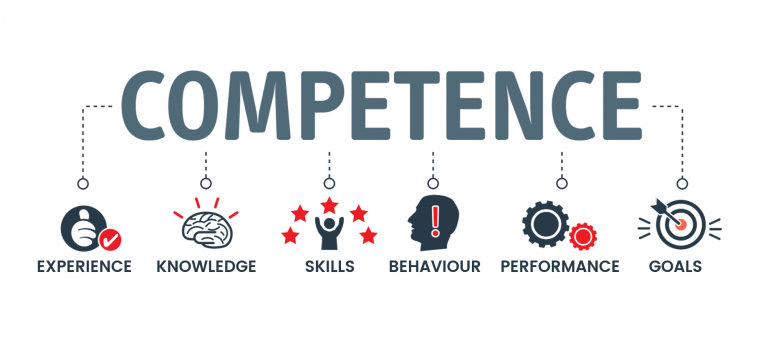
Competence is one of those words we all think we know but which has more than a few meanings. It may mean the ability to do something. Or the ability to do something successfully. Or the ability to do something efficiently. Or the ability to do something well. Or the ability to do something successfully, efficiently, and well. In business, we sometimes speak of a “core competency,” which is something a company does that differentiates it from the competition, giving it a competitive advantage. In this sense, competence is sometimes defined as the ability to offer products or services that are perceived as valuable, rare, and essentially inimitable.
The single most powerful tool in the 80/20 toolkit is simplification. The legendary management guru Peter Drucker may well be the most revered authority on simplification in business, but I prefer to go back to

Confederate general Nathan Bedford Forrest (1821-1877) was not a great man. His actions in combat were sometimes that of a terrorist, as when he massacred hundreds of Union troops at the Battle of Fort Pillow (Tennessee, April 12, 1864) after they had surrendered.

Zero-up has one goal and one goal only. It is to help you to establish or reestablish the business with the level of resources necessary to optimally serve the critical few. Achieving this goal means

Zero-up offers a robust menu of methods. Which one is best? The answer to this is entirely pragmatic. The right approach is the one that works for you, yielding the optimal view of your business.

Quad 1? You know what to with it. It’s your Fort. You need to hold the Fort—not at all costs, but at a rational cost. That means allocating as much of your resources to it