It was a pleasure to be back on the Strategy Skills Podcast with Chris. We live in a crazy time—AI is transforming industries, teams are more remote than ever, and the sheer volume of “noise” can be disconcerting for any leader.
In this environment, it’s easy to get distracted. It’s easy to spread your resources thin, trying to be everywhere and do everything. I have a name for this: “peanut buttering.”
When you “peanut butter” your resources, your strategy, and your people, the best you can hope for is mediocrity. Many leaders think they’re being fair by giving every opportunity a little bit of attention. But that’s not leadership. That is the absence of leadership.
True leadership, and the key to profitable growth, is having the courage to focus on the “critical few.”
The $210 Million Opportunity We Were Ignoring
I shared a story on the podcast that I think makes this crystal clear. When I took over OTC, the company was struggling. We needed to find about $200 million in growth.
The natural reaction from the team was to look for new opportunities. “Let’s go to Canada. Let’s go to Mexico. Let’s find new markets, new customers, new geographies.”
I stopped the room and said, “Why don’t we just look at what we’re actually doing?”
I had the sales leaders pull the numbers on our number one customer, Toyota. At the time, it was a $40 million-a-year account. A big deal. I asked them a simple question: “If we just look at the geography we’re in, with the products we already have, what is the total served available market with Toyota?”
The team did the research and came back blown away. The number was $250 million.
We were sitting on a $210 million opportunity with our best customer, and our focus was on chasing brand new business in Europe. That changed everything. We realized we had more opportunity than we needed right in our own backyard.
We formed teams around Toyota. We went to them and asked, “What can we do to be a better partner?” We didn’t have to displace anyone. We just had to be better at what we were already doing. We more than doubled that business because we focused.
Your Data Will Tell You the Truth
This isn’t just a gut feeling; it’s a mathematical certainty. The 80/20 principle—that 80% of your results come from 20% of your efforts—is proven over and over.
When we pulled the data at OTC, it was stark. We had 12,000 customers. But 200 of them made the difference for the whole company. In fact, just 20 customers were responsible for almost 65% of the revenue.
A billion-dollar company was being run on 20 customers.
The data tells you the story instantly. The hard part is having the courage to listen to it. The hard part is having the courage to organize your entire company around those 20 customers and taking resources away from the thousands of others that aren’t driving the business.
My 8-Hour Turnaround Plan
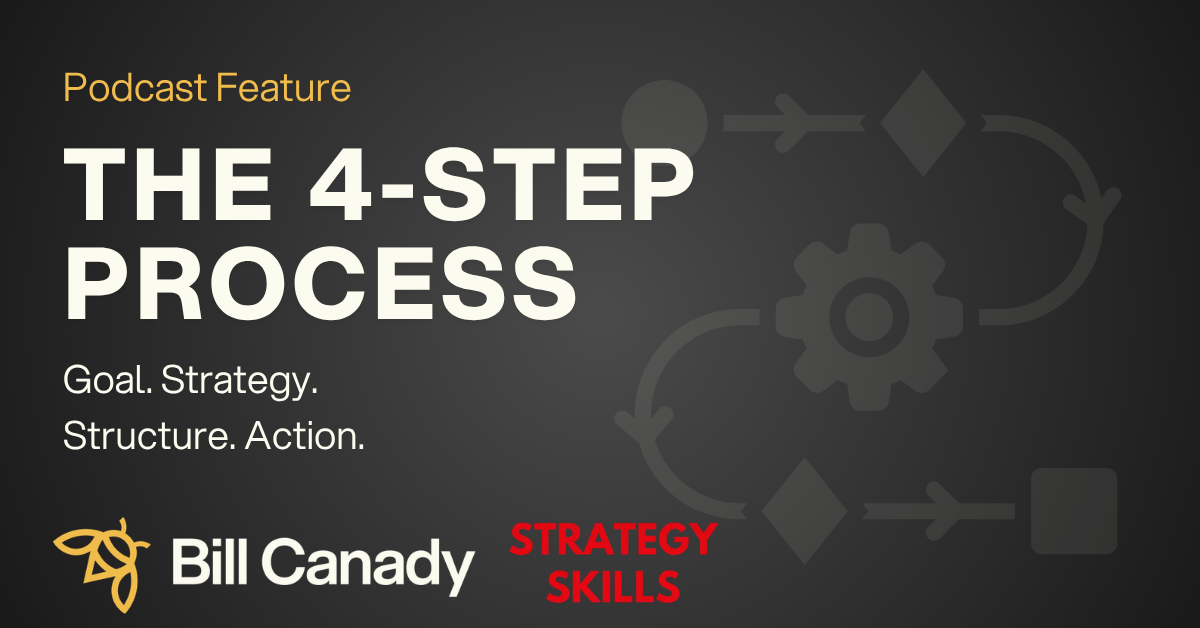
Chris asked what I’d do if I only had a few hours to help a struggling company. My process is simple, and it’s built on this principle of focus.
-
I’d ask, “What is the goal?” I promise you, in most boardrooms, the leadership team does not agree on the goal.
-
I’d ask, “What is your strategy?” They’ll list 25 different things they’re working on. And I’ll find it’s the exact same people assigned to all 25.
-
My recommendation would be to stop. You don’t have more hours in the day. You don’t have more money. Stop doing 24 of those things. Take all those resources, all those people, and focus them on the one or two “critical few” that will actually achieve the goal.
I’ve seen this simple, ruthless focus deliver a 200 to 500 basis point improvement in profitability in the first year alone. That’s a 50% improvement in profit for a company at a 10% margin, simply by doing less.
The Golden Triangle: Visionary, Operator, and Prophet
This entire philosophy is what I’ve codified into the Profitable Growth Operating System (PGOS), which is the subject of my new book, From Panic to Profit.
It’s a system, but it only works if you have the right people in three key roles:
-
The Visionary: The CEO who sets the goal and makes following the process a “condition of employment.”
-
The Operators: The presidents, VPs, and directors who run the business using this process every single day.
-
The Prophet: This is the key. This is the expert who trains the team, protects the process, and helps “find the profit” by guiding the analysis.
You have to have all three.
In a world that pulls you in a million directions, your greatest competitive advantage is focus. The data is already there. Look at your customers. Look at your products. Find the 20% that’s driving your business, and place your bets there.
It was great to be on the show. Thank you for having me.