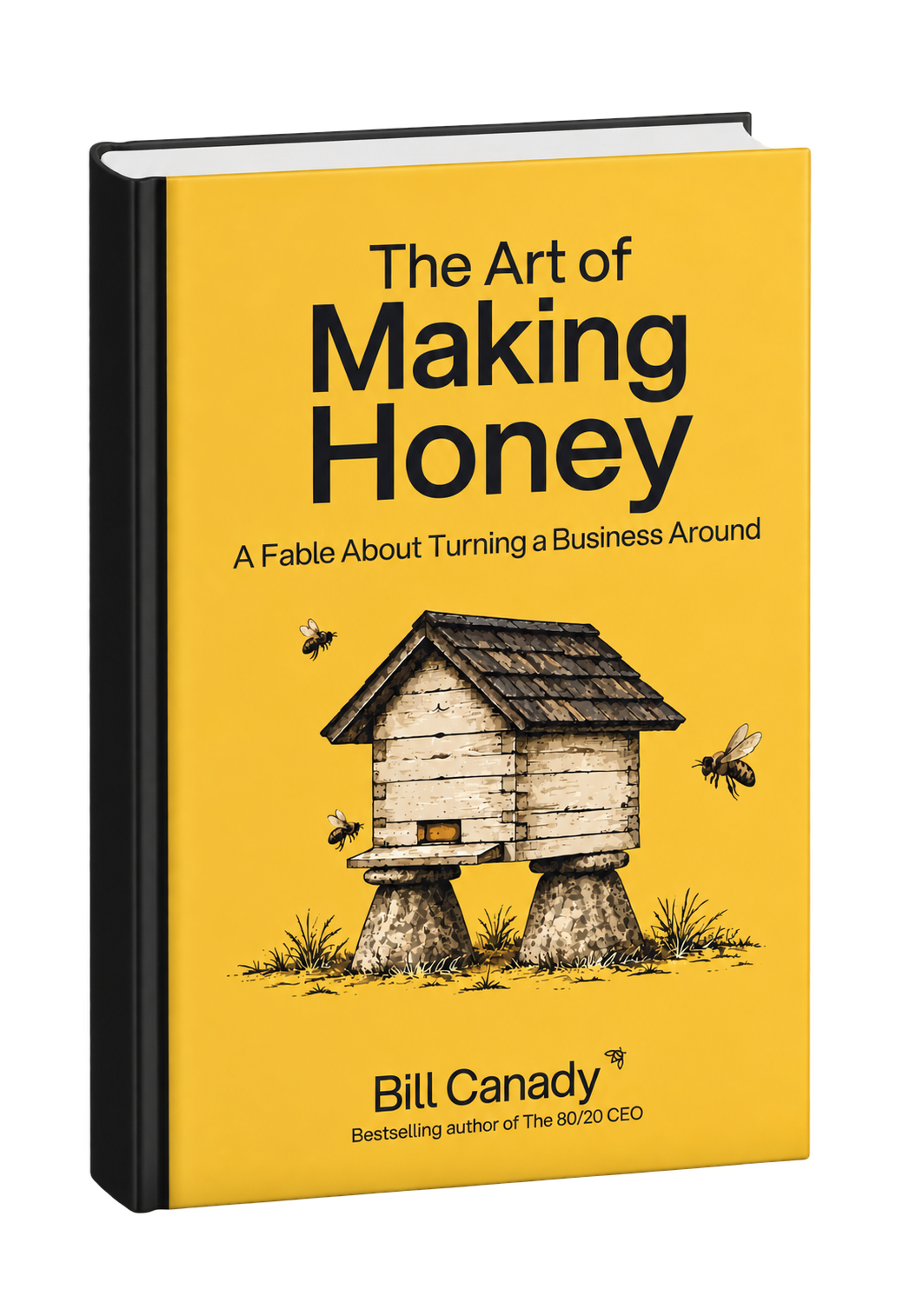
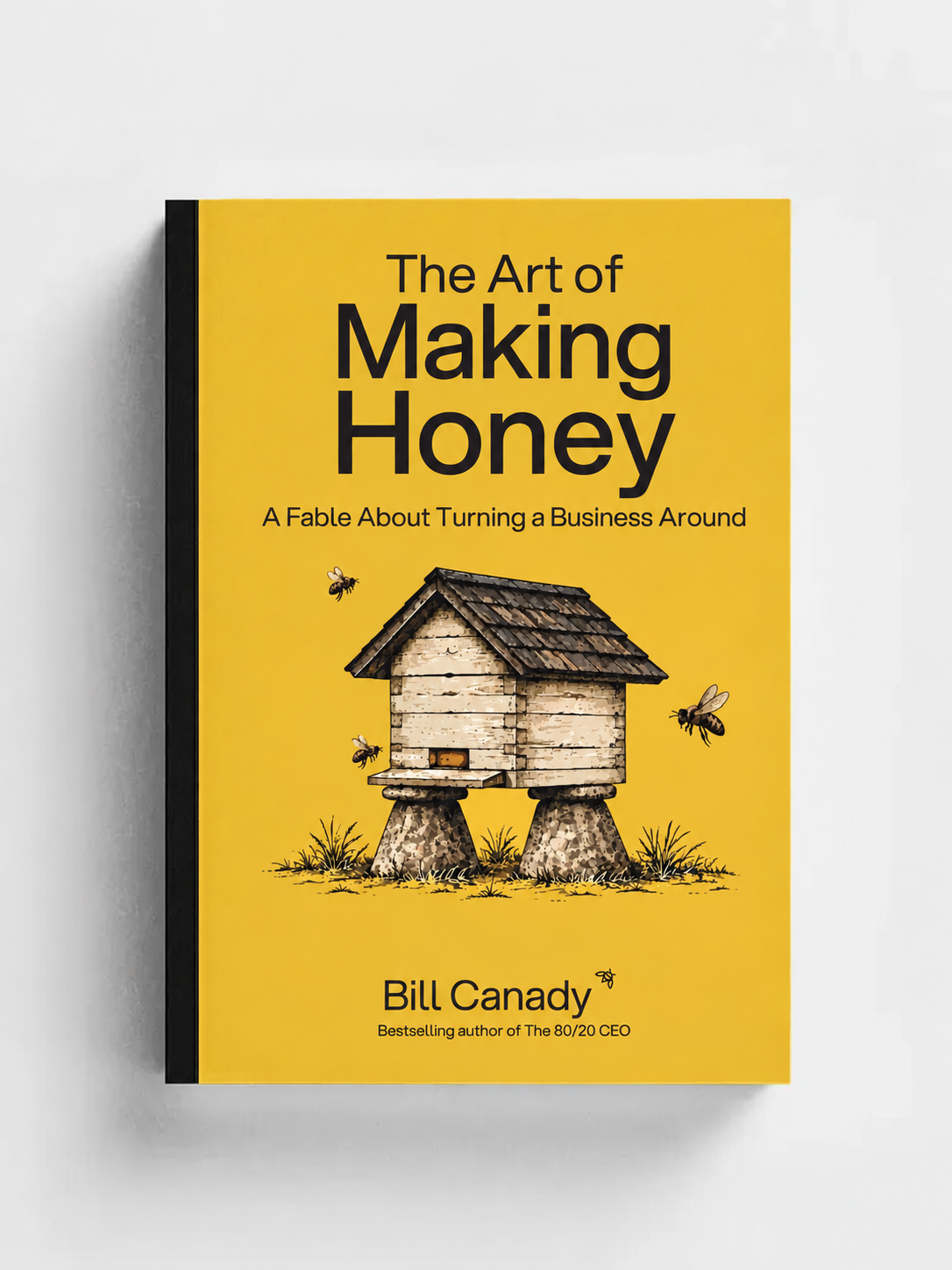
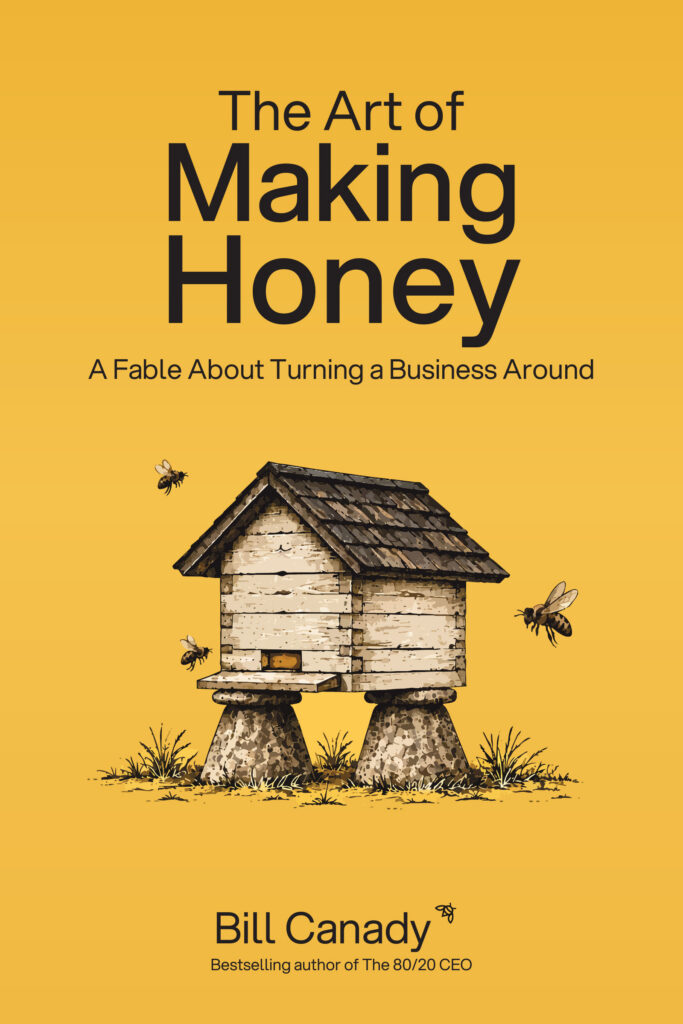
Coming October 20, 2026
The clock started before she arrived.
When Bea is chosen to lead the colony, forty-four days of a hundred-day clock have already passed. She has fifty-six days to find the number, align the team, build the plan, and turn the business around.
Most leaders inherit situations they did not create, but they are still responsible for delivering the results.
The customers are changing. The numbers are getting worse. Everyone is working hard, but the business is still moving in the wrong direction.
The challenge is not simply working faster. It is finding the right number, agreeing on the plan, and moving the entire organization before time runs out.
A leadership fable about starting over
Bea has inherited a colony in decline. Her sales lead cannot identify which customers make money. Her engineer has six years of ideas nobody asked him for. Her board has watched the decline for a decade and still calls it considerable upside.
Everybody is working hard. The numbers are getting worse.
What Bea does next, in the order she does it and with the clock on the wall, is the story. Part One shows how it happened. Part Two explains how to run it.
Rank customers by revenue, gross margin, and cost to serve. Identify the critical few that create the greatest value.
Remove the products, processes, and activities preventing the organization from focusing on what matters.
Ask whether you would build the cost base, footprint, and organizational structure the same way again.
Put resources behind the parts of the business that have already proven they can produce profitable growth.
For leaders who inherited a business, team, or situation that was already under pressure before they arrived.
For owners who need to stop the decline, identify what creates profit, and build a practical turnaround plan.
For teams that need to align around the same number, make difficult decisions, and execute the plan together.
The gap between the day the clock starts and the day you have a plan is where many leaders remain longer than they realize.
The Art of Making Honey shows how a leader can enter a difficult situation, ask the right questions, make the hard decisions, and move an organization from Day Zero to Day One.
For anyone with a job bigger than themselves, this book turns a memorable story into a practical method for action.
Read the opening chapter and meet Bea on the day she inherits the hive, the clock, and a problem she did not create.
The book settles the argument. This does the work.
Part Two of the book gave you the order: Segment. Simplify. Zero-Up. Grow. The Field Guide is those four phases as questions, in the order Bea asked them, with room to write the answers down — the customer list ranked by what each one contributes, the critical few named, the quad, the stop list, the Zero-Up question, the growth plan with a date on it.
Fill it in alone in an afternoon and the answers will be yours, and nobody will carry them. Fill it in with your team, one phase a week, everyone writing before anybody speaks, and the disagreements are the information. Every worksheet may be copied for use inside your own company. The facilitator’s guide at the back has the session plans.
A practical framework for restoring leadership focus.

A clear guide for identifying and closing value gaps.

Clear, confident, and grounded in real experience.

A powerful blueprint for growth, accountability, and results.

A valuable resource for driving sustainable growth.

The best leadership book I’ve read in years.

A game-changer for building unstoppable businesses.

A clear system for making a business more profitable.

The Art of Making Honey arrives October 20, 2026. Join the list to receive release updates and be notified when the book becomes available.
Get notified when The Art of Making Honey by Bill Canady becomes available, along with important launch updates and exclusive book content.
By signing up, you agree to receive email updates from Bill Canady. You can unsubscribe at any time.