Recently, I sat down with Alex Rawlings on The Private Equity Podcast by Raw Selection to discuss the practical, no-nonsense systems I use to get results. We talked about how to focus your efforts, build a world-class team, and simplify complex operations to drive profitable growth.
You can listen to the full episode and dive into all the insights here. I’m sharing some of the key takeaways from that conversation below.
I’ve spent my career leading companies backed by private equity, most recently as CEO of OTC Industrial Technologies and Arrowhead Engineered Products. Both are owned by Genstar Capital, one of the most impressive private equity firms I’ve worked with. People often ask me how I manage two large organizations simultaneously. The truth is, it comes down to having a system, a repeatable, data-driven process I call the Profitable Growth Operating System (PGOS).
This system allows me to stabilize, grow, and position businesses for a successful exit without guessing, rushing, or wasting capital. In private equity, every decision has to produce a measurable return. That’s the mindset that drives everything I do.
Why Speed Matters in Private Equity
If there’s one mistake I see time and again in private equity, it’s moving too slowly. Many CEOs and portfolio leaders spend their first six months just learning the ropes, understanding where the bathroom is, so to speak. But in private equity, time equals return.
You have a narrow window right after acquisition when you can make bold, transformative changes. If you hesitate, you lose momentum. I’ve learned that you need to move fast, but never recklessly. That’s why I rely on a structured, 100-day process to establish goals, strategy, structure, and action, all rooted in hard data, not gut instinct.
My 100-Day Process: From Goals to Action
When I take control of a new company, we start on Day 1 with four foundational meetings that set the tone for everything ahead.
- The Goal Meeting – Math First, AlwaysThis is where we decide the end game. We define what return on invested capital (MOIC, or Multiple on Invested Capital) we need to deliver for our investors, typically 3x or more. We look at the business today, project what it can sell for, and calculate exactly how big we have to grow. Then, we break that growth into two buckets: organic and acquisitive.
- The Strategy Meeting – The RoadmapOnce we know the goal, we define how to reach it. I always say, if you make industrial pumps, don’t start looking at restaurants. Stay in your lane and double down where you’re strong.
- The Structure Meeting – Organize to WinThis is where most companies fail. They have great strategies but don’t organize themselves to execute. I make sure our structure, teams, responsibilities, and reporting are all aligned with our strategy.
- The Action Meeting – Execution ModeFinally, we map out specific steps, ownership, and timelines. By this point, everyone understands the why, the how, and the when. In 100 days, we’ve gone from introduction to execution, what I call our “stub year.”
After this, we enter the “Earn the Right to Grow” phase, focused on doing what we said we would do and measuring every move through data.
The Data That Drives Every Decision
My operating model is built on one core principle: the 80/20 rule. Eighty percent of your results come from 20 percent of your efforts. I’ve never seen a business where this doesn’t hold true.
We analyze two data sets in depth:
- Customers
- Products
We run a two-dimensional analysis to find out which customers are buying which products.
A customers buy A products, our sweet spot.B customers often buy lower-margin, complex products that drain resources.
When we shift resources away from B customers and B products and refocus on the A quadrant, profits skyrocket without adding capital. That’s what private equity loves: self-funding growth.
We also take practical actions like raising minimum order quantities and adjusting pricing for customers who aren’t truly partners. It’s not about firing customers; it’s about ensuring mutual value.
The Toughest Lesson: You Can’t Please Everyone
Many leaders struggle with the idea of “cutting” customers. I get it, it’s emotional. We naturally want every sale we can get. But math doesn’t lie.
I’ve seen the numbers across multiple industries: about 200 percent of your profit comes from A customers. That means you’re losing money elsewhere. Usually, the bottom 4 percent of revenue, your smallest and least loyal customers, consumes 25 percent of your costs.
That’s why I tell my teams: you don’t have to fire anyone, but you do have to change the rules. For example, at Arrowhead, we raised the minimum shipping quantity. If a small online seller wants to continue ordering, they now need to commit to pallet-size orders. Many can’t, and that’s okay. They can buy from Amazon instead. This lets us focus our operations on customers who value us and are willing to grow with us.
The Virtual Advantage: Running Two Companies at Once
Five years ago, I couldn’t have imagined leading two global businesses at the same time. But technology changed everything.
At both OTC and Arrowhead, my leadership teams are largely virtual. We collaborate across time zones using digital tools, hold structured meetings, and operate through clear processes rather than geography.
The beauty of running companies through a defined system is that it doesn’t matter what product you sell, whether pumps, engines, or power tools, the process scales. It’s not about control; it’s about alignment.
Building a Profitable Growth Operating System
Over time, I’ve formalized my approach into what I call the Profitable Growth Operating System (PGOS). It combines five key components:
- 80/20 Thinking – Focus on what truly drives profit
- Lean Principles – Eliminate waste and inefficiency
- Talent Alignment – Hire people who follow process and data, not emotion
- Strategic Planning – Annualized, measurable, and adaptive
- Mergers & Acquisitions – The rocket fuel that accelerates expansion
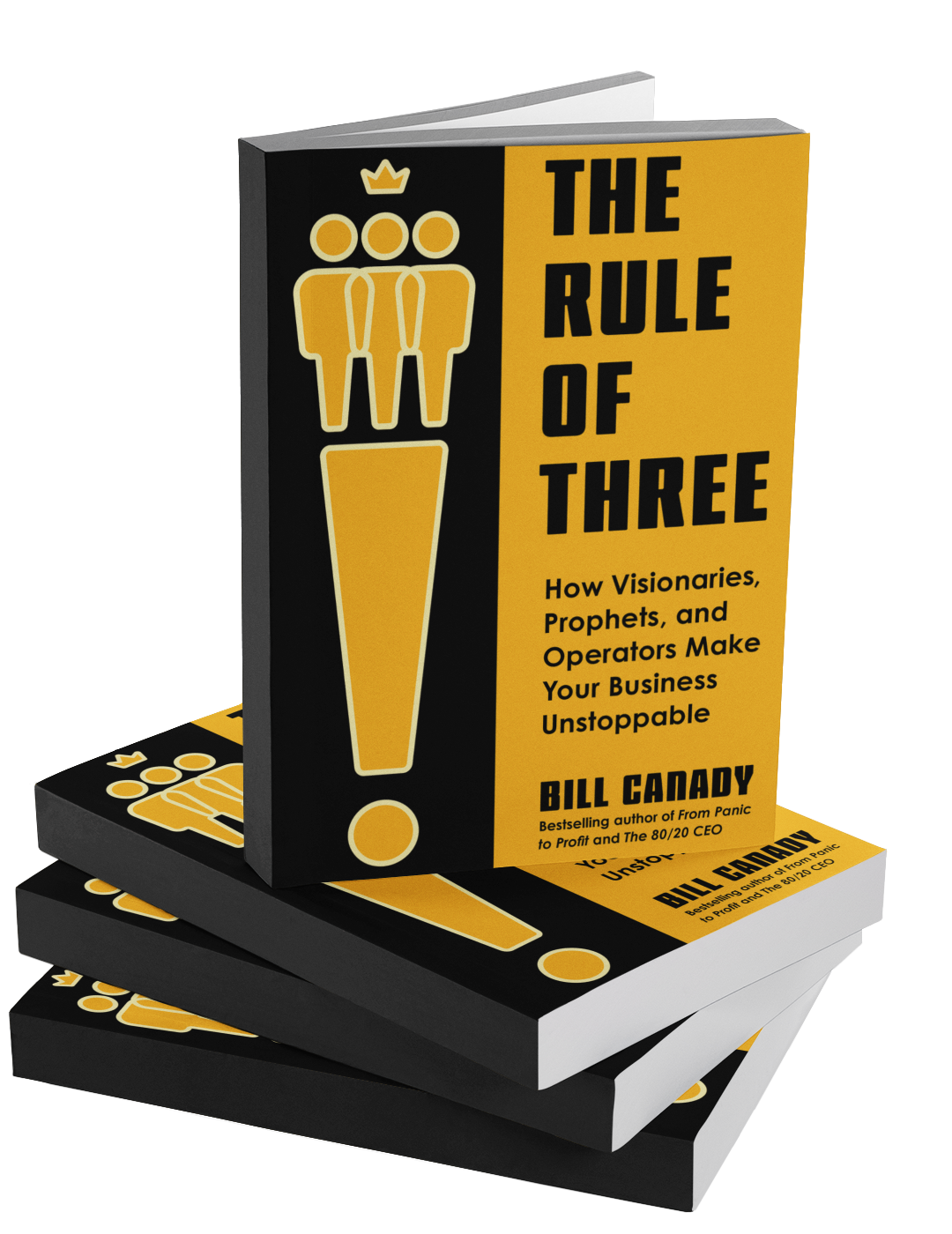
This framework is the reason I can scale businesses quickly, profitably, and sustainably. It’s also the foundation for my upcoming book series, starting with Profitable Growth Operating System: Take Command of Your Business.
The Power of Data Over Emotion
Leading with data isn’t about removing humanity from decision-making. It’s about removing bias. The emotional side of business is where most mistakes are made. In private equity, every emotional decision has a cost.
That’s why I always remind my teams that our goal is to make money. The faster we reach the exit, the better the return for everyone: investors, employees, and customers alike. Every action must be self-funding, not dependent on another round of capital.
This philosophy has helped me build companies that thrive on performance, not hope.
Looking Ahead
As I continue writing my books and refining PGOS, my mission is simple: help other leaders take command of their businesses through clarity, speed, and discipline.
Private equity doesn’t reward good intentions. It rewards results. But when you combine data-driven execution with a high-performing team that believes in the process, results are inevitable.
At the end of the day, success in private equity leadership comes down to three words:Go fast. Think clearly. Follow the data.