70% of PE-backed CEOs don't make it to exit. Here's how not to be one →

70% of PE-backed CEOs don't make it to exit. Here's how not to be one →
The Keynote · For Private Equity Sponsors
The 1000-Day CEO is the keynote I give to sponsors and the CEOs they back — at annual meetings, portfolio-CEO summits, and operating-partner offsites. As long or as short as the room needs. Every CEO in it leaves knowing which day they are on, and what to do Monday.
From Bill Canady — chairman and CEO of PE-backed industrial companies. I have run the companies you own, from every seat in the room.
The same 3.0x. A different clock.
Exit in 4 yrs
Exit in 7 years
Same company. Same buyer. Same dollars back. The clock took 14.6 points of return off the table, and no exit multiple puts them back.
Why this talk, now
Returns now have to be built, not bought. Building them takes double the EBITDA growth it used to. And the clock is the longest it has ever been. Every year a company spends not compounding is not a delay — it is a permanent write-down of the return. I have watched it happen from the CEO’s chair, the chairman’s chair, and the sponsor’s side of the table.
Holding periods at exit, up from five to six for the decade before.
Bain & Company, 2026
Buyout-backed companies held past year four — more than 16,000 of them.
McKinsey, 2026
Annual EBITDA growth a typical deal now needs, against about 5% in the 2010s.
Bain & Company, 2026
Sponsors that replace a portfolio CEO during the hold. Turnover spikes in year two.
AlixPartners, 2026
Six movements, in the order I run them. The 100-day and 1,000-day model is illustrative — a sequence, not a stopwatch — and every room gets it at the length the room needs: twenty minutes for an LP meeting, a keynote for an annual meeting, a half day with the operating team.
3.0x in four years against 3.0x in seven. 12 is the new 5. Why the clock is now the return.
The three misalignments that turn a budget into a year-two CEO search: nobody owns the number, nobody audited the team, the board sees results instead of the plan.
Day 1 is a decision, not a hire date. Two kinds of zero. A $200 million company can be at Day Zero eight years in.
Four gates in sequence — the number, the strategy, the structure, the cadence — told through a company I ran: 1,400 people, forty locations, one number the whole building could say out loud.
Earn the right to grow. Scale what matters. Always be exiting. Exit-ready with years of hold still on the calendar.
A readiness test every CEO can answer tonight and every operating partner can run across the portfolio tomorrow.
What the room leaves with
Do you own the number? Can you name the few things that matter this quarter? Does your team own the plan?
Six things an operating partner can verify, not believe.
The free tool that turns the fund's math into an operating target — linked from the last slide.
The talk cut into shareable segments for the CEOs who could not be in the room.
Bulk copies at author pricing, signed if you want them signed.
I took the keys from a sponsor and had to hit the number — a $1.5 billion industrial company, 1,400 people, forty locations.
I have been the one who had to change the CEO, and the one who had to explain to a board why the plan was behind.
I sit where the operating partner decides. The talk is what I learned there — not what I read.
One talk, three rooms. The spine does not change; the examples and the length do.
Keynote
Before the event, a call with your operating partner. I run the three questions across the portfolio, anonymized, so the examples in the room are yours.
The room: your CEOs and CFOs, deal and operating teams.
Keynote + working session
The talk, then a live bridge walk-through: one company’s number turned into five levers — price, mix, share, M&A, cost — with dollars and names on each.
The room: operating partners, heads of portfolio operations, deal partners.
Short form
The thesis for an audience that underwrites: when the multiple is flat, the operating clock is the return.
The room: LPs, intermediaries, the ACG and PEI circuit.
Who is speaking
I chair Arrowhead Engineered Products, a $1.5 billion PE-backed industrial company, and OTC Industrial Technologies — revenue up 43 percent and earnings up 78 percent on my watch. More than thirty years in the chair. Over $3 billion in shareholder value. Every framework in the talk was built in the field, under a sponsor’s clock, and run on my own P&L before it went in a book.
“I know what a sponsor needs because I have carried it myself: a thesis that becomes real EBITDA, a management team aligned to one number, and a company that is exit-ready when the hold is up.”
Bill Canady
The books behind talk
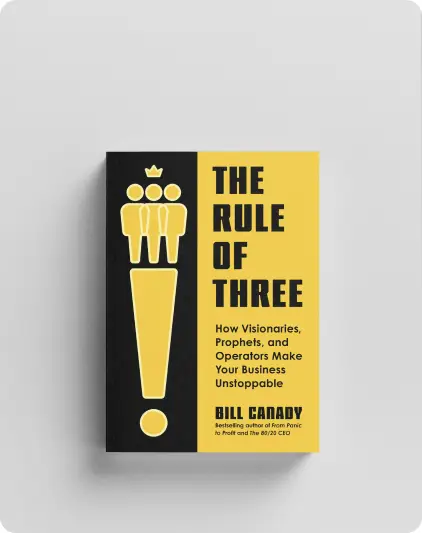
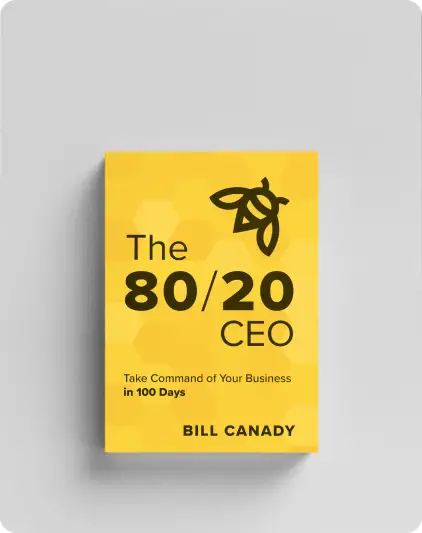
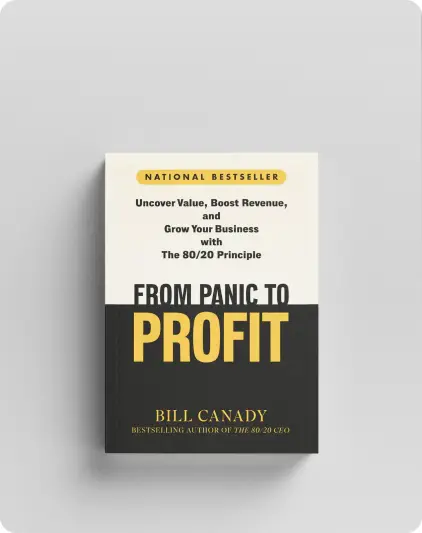
Four volumes, one clock: Take Control (Days 1–100), Earn the Right to Grow (Days 101–365), Scale What Matters (Year 2), and Always Be Exiting (Year 3). They sit on the shelf beside The 80/20 CEO, From Panic to Profit, The Rule of Three, and Earn the Right to Win — the operating system, written down. Every CEO in your room can leave with the volume for the day they are on.
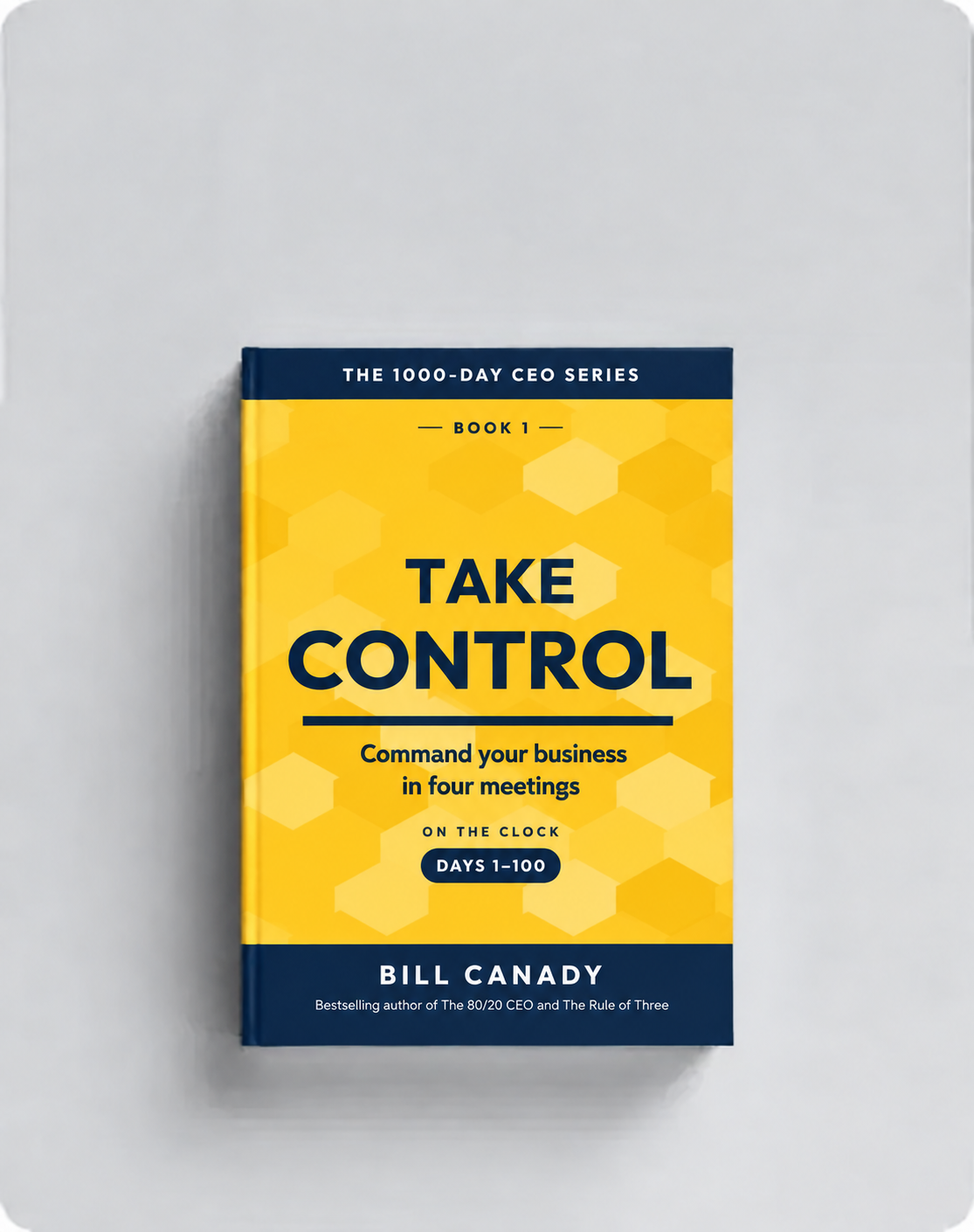


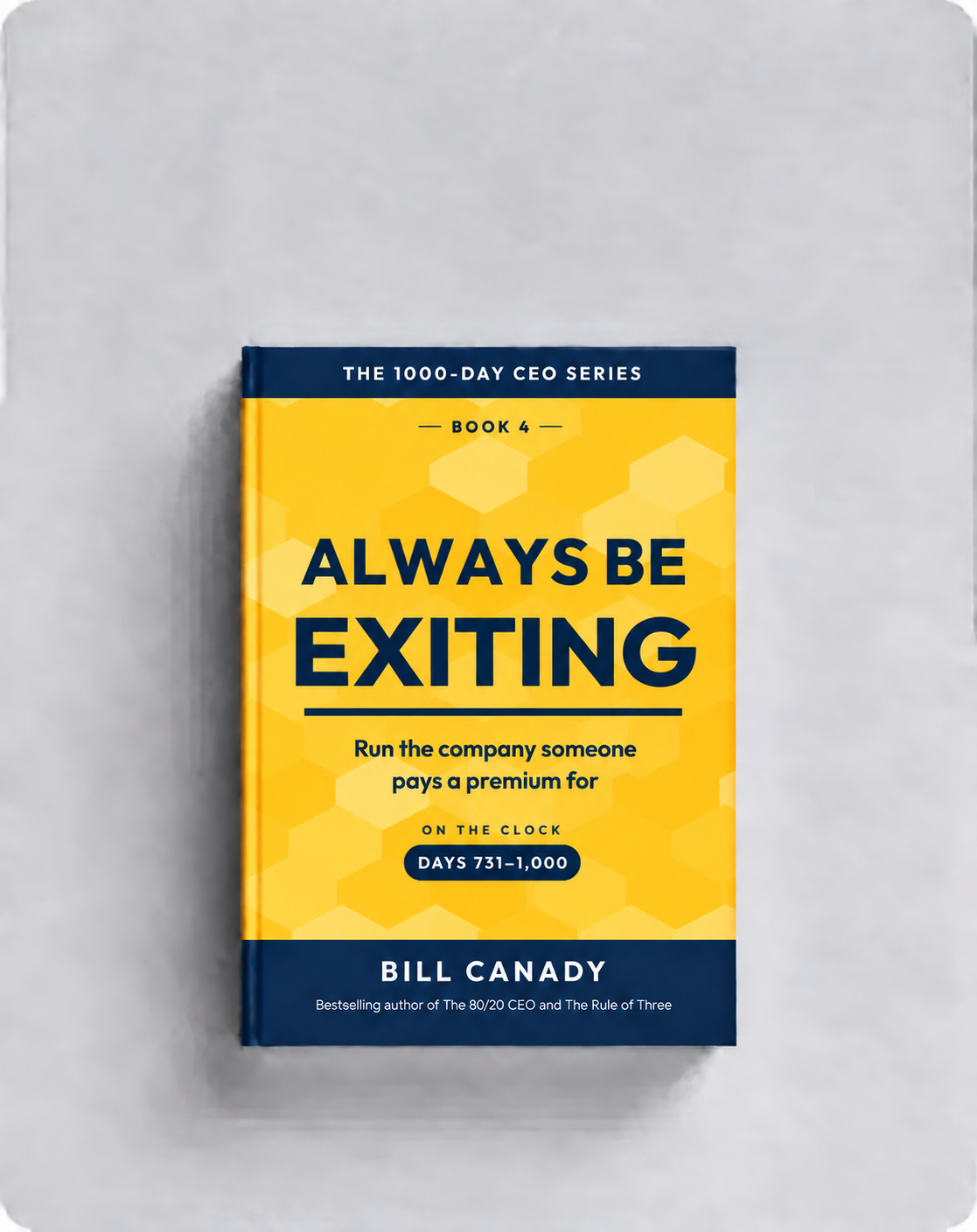
Because I have sat in every seat in the room. I took the keys from a sponsor as CEO and had to hit the number. I have been the chairman who changed the CEO. I sit at the table when the operating partner decides. The talk is what I learned there, and your CEOs can tell the difference in the first two minutes.
As long as the room needs. Twenty minutes for an LP meeting. A keynote for an annual meeting or portfolio-CEO summit. A half day with the operating team when they want the bridge built live. The spine is the same; the depth changes.
Yes, and it costs you thirty minutes: a call with your operating partner before the event. I run the three questions across the portfolio, anonymized, so the examples in the room are yours and the CEOs recognize themselves without being named.
Whatever you want. Most sponsors ask me to spend an hour with the operating partner and the two or three CEOs who answered the three questions honestly. Some bring me one company. Either way, that is a separate conversation, and I am glad to have it.
Ask on the first call and you will get a number, not a range. Sponsor-hosted rooms — annual meetings, portfolio-CEO summits, offsites — are priced differently from association and corporate keynotes. Travel and books are the only other lines.
The portfolio map — companies, hold year, the number the fund cares about — a thirty-minute call with your operating partner, and a room where the CEOs can answer three questions honestly.
Yes. Any of them, in bulk, at author pricing, signed on request — and most sponsors give each CEO the 1000-Day CEO volume for the day they are on.
Both, and yes. In person is better — the three questions land harder when the CEOs are sitting next to each other — and the most useful part of the day is usually the conversation after the talk.
Tell me the room, the date, and how many CEOs will be in it. You will have a yes or a no — and the number — within 48 hours.