How the 80/20 Principle Transforms Leadership and Growth
For more than three decades, I have had the privilege of leading companies through nearly every business condition imaginable, from boom years to economic shocks, from startups to global industrial organizations. Along the way, one simple truth has stood out: growth is not a right, it is something you earn.
When I wrote From Panic to Profit, my goal was not to create another management book. I wanted to share a system that I call the Profitable Growth Operating System, built on real-world results, data, and experience. This framework helps leaders navigate uncertainty, turn chaos into clarity, and unlock growth that lasts.
The Power of Focus: Understanding the 80/20 Rule
The foundation of my approach is the 80/20 Principle, first observed by the Italian economist Vilfredo Pareto more than a century ago. He discovered that 80 percent of the land in Italy was owned by 20 percent of the people, and that this imbalance appears almost everywhere.
In business, it means that 20 percent of your customers, products, or efforts drive 80 percent of your results. Yet most companies spend their energy chasing the wrong 80 percent.
When I step into a company, I start by looking at data, not opinions or politics. We find where value is truly created and shift our people, capital, and attention there. It requires courage to stop doing what does not work, but it is the only way to achieve consistent and profitable growth.
The Zero-Up Experiment
One of my favorite exercises is what I call Zero-Up Thinking.
Imagine starting from zero with a blank sheet of paper and asking:If I had to build this business again from scratch, with the same resources, where would I invest first?
Most leaders realize they would start with their best customers and products, the ones that generate most of the profit. They would make sure those relationships are strong before doing anything else.
This mindset helps teams stop clinging to legacy projects or unprofitable distractions. It forces focus and discipline, two qualities that separate companies that merely survive from those that truly scale.
The Three Leaders Every Company Needs
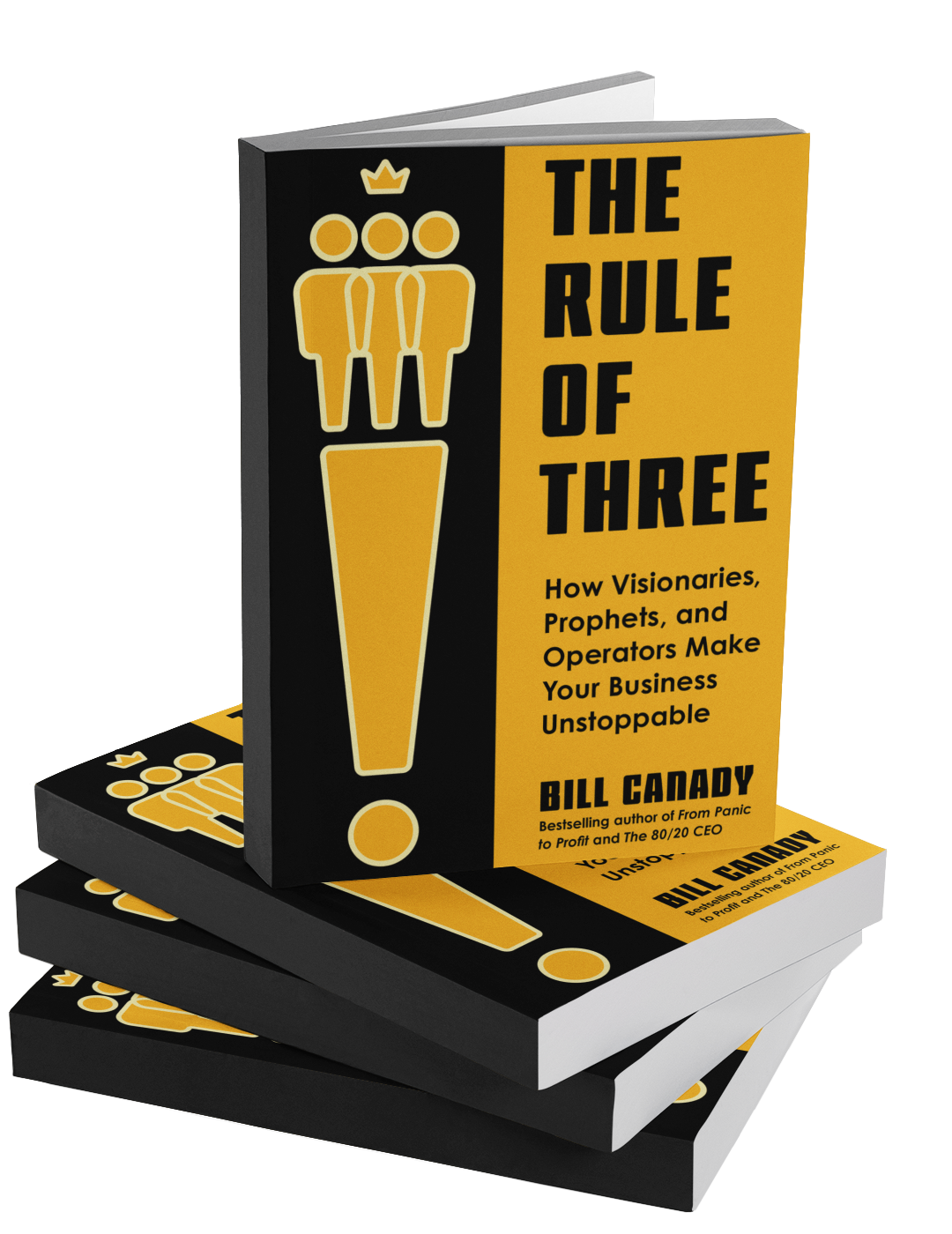
Every successful organization needs three types of leaders:
- The Visionary – the strategist who defines where the company is going and why it matters.
- The Operator – the builder who turns vision into execution and keeps the business running day to day.
- The Prophet – the teacher or expert who brings in specialized knowledge to accelerate transformation.
Great companies balance these roles. The visionary sets direction, the operator delivers performance, and the prophet ensures that learning becomes part of the culture. When any of these roles is missing, growth slows or stalls.
Lessons from the Navy: Discipline and Resilience
Before business school and boardrooms, I served in the U.S. Navy. I will admit that at 18 years old, I hated every minute of it. But looking back, it was one of the most important experiences of my life.
The Navy taught me discipline, teamwork, and resilience. It taught me to finish what I start, pay attention to details, and treat people with respect. Those lessons have guided every leadership decision I have made since.
No matter how tough the day or how complex the challenge, I still go back to that mindset: do your duty, take care of your people, and finish the mission.
Data, Not Drama
I often say: be data-driven, but do not wait for perfection. If you have less than 20 percent of the information, you are guessing. If you wait until you have 80 percent, you have waited too long.
Leaders must make decisions in ambiguity. The goal is not to be right all the time but to act, learn, and adjust quickly. Waiting for every piece of data before moving paralyzes progress.
At OTC Industrial, one of the companies I helped lead during the pandemic, we faced pricing pressure, cash challenges, and an unmotivated workforce. Instead of waiting for perfect clarity, we gathered just enough insight to act. We built a pricing team, took control of cash flow, and re-engaged our people. Within months, results turned around.
Culture Eats Strategy (and Then Some)
You can have the best strategy in the world, but without the right culture it will not work.
I have seen too many organizations treat change initiatives as short-term experiments. Real transformation happens when people feel safe to try, fail, and improve together.
A winning culture is not built on fear or punishment. It is built on forgiveness, accountability, and progress over perfection. Encourage your team to lift each other up, not tear each other down. When that happens, data and strategy come alive.
The Rise of AI and Why It Is a Gift to Leaders
Artificial Intelligence is not the enemy of leadership. It is an amplifier.
At my companies, we have integrated AI to analyze millions of data points that used to take humans weeks to process. AI handles the heavy lifting, freeing leaders to focus on insights, creativity, and strategy.
But here is the key: AI is only as smart as the human leading it. Garbage in means garbage out. The real brilliance still lies in human judgment, in asking the right questions and knowing what to do with the answers.
Earning the Right to Grow
Before chasing growth, ask yourself:
- Are we serving our customers with excellence?
- Are our people equipped and aligned?
- Is our foundation solid?
Growth amplifies whatever already exists, good or bad. Companies that scale dysfunction collapse faster. Those that strengthen their core can grow sustainably.
Final Thought
If there is one message I hope leaders take from From Panic to Profit, it is this: clarity beats complexity.
Get the basics right. Focus on your top 20 percent. Build a culture that learns, forgives, and executes. And remember, leadership is not about knowing everything. It is about setting the vision, empowering others, and having the courage to act when things are uncertain.
That is how you move from panic to profit and from good to truly great.