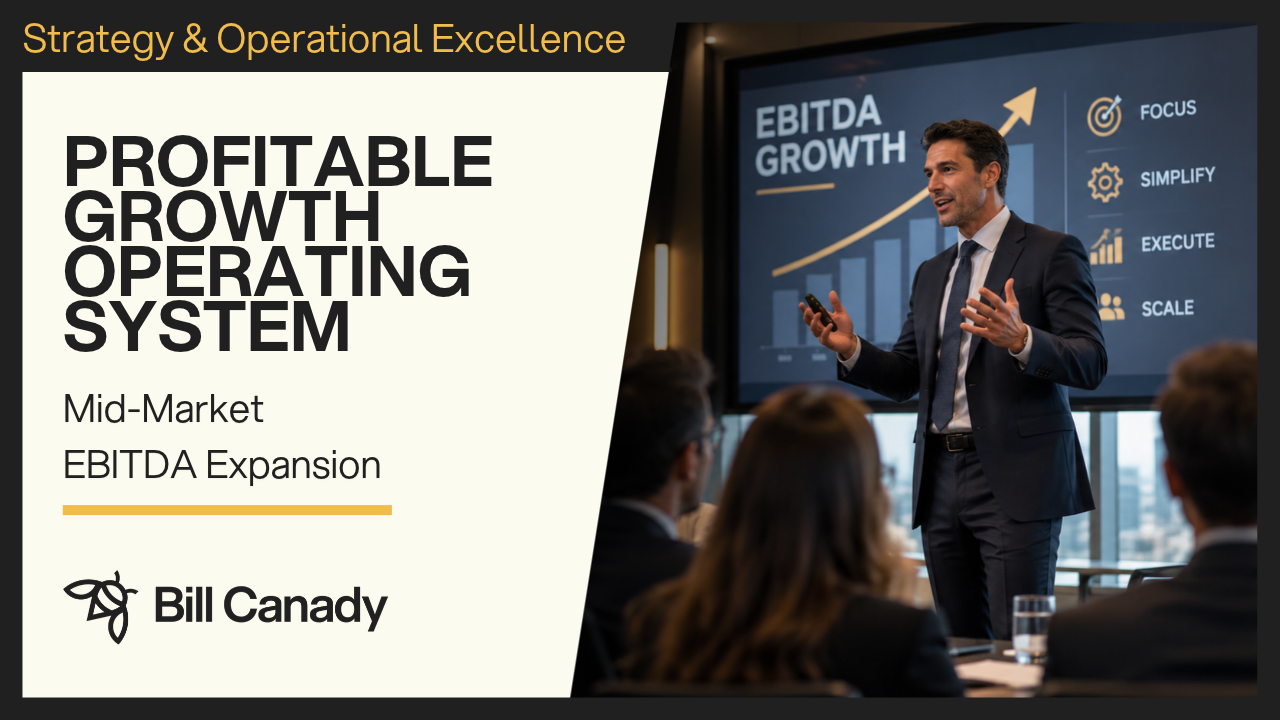
Bill Canady’s Profitable Growth Operating System (PGOS) gives mid-market CEOs, operating partners, and PE sponsors a four-discipline framework built on the 80/20 principle to expand EBITDA, simplify operations, and build durable enterprise value through Operational Excellence Frameworks for Mid-Market EBITDA Growth. Leadership teams move from insight to execution, targeting measurable margin gains instead of chasing revenue alone.
By adopting a profitable growth operating system, organizations can focus on sustainable strategies that lead to long-term success.
Key Takeaways
- PGOS turns complexity into profit for middle-market CEOs without adding organizational chaos.
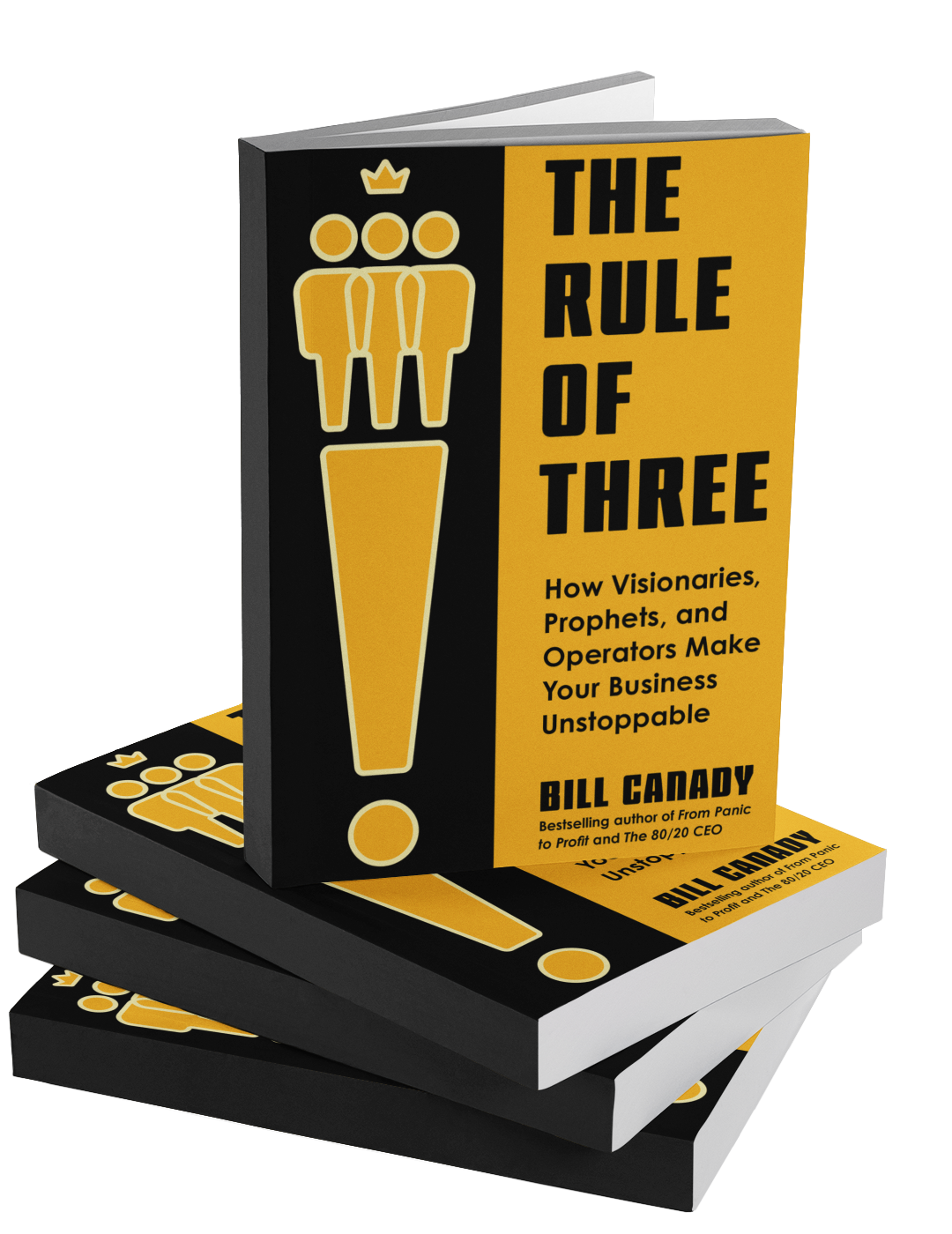
- The Rule of Three framework eliminates CEO bottlenecks by aligning teams for execution.
- 80/20 leadership expands margins by concentrating on vital few customers and products.
- Durable margin comes from starving complexity, not from cutting costs indiscriminately.
What Is the Profitable Growth Operating System?
The Profitable Growth Operating System functions as a proven system for profitable growth, built by Bill Canady on the 80/20 principle. Middle-market leaders use the PGOS framework to grow earnings before interest, taxes, depreciation, and amortization while removing operational clutter that erodes margin. For portfolio companies pursuing mid market EBITDA expansion, the system offers a structured alternative to reactive cost-cutting or scattered growth initiatives.
Bill Canady built this approach on more than 30 years as a global business executive, leading organizations across industrial and consumer products and services. That operating history shapes a system designed for executives who need measurable EBITDA gains without the disruption that often accompanies transformation projects. The goal stays consistent: simplify the business and build durable enterprise value without adding chaos to daily operations.
How Does the PGOS Framework Structure Growth?
The framework moves leadership teams through four disciplined phases, converting insight into execution rather than leaving strategy as theory. Each phase narrows focus so a company concentrates time, talent, and capital on the customers and products that actually drive profit.
The profitable growth operating system offers a unique approach to business optimization.
One benefit of implementing the profitable growth operating system is the ability to streamline processes.
- Segment — Identify which customers, products, and markets generate disproportionate value.
- Simplify — Strip out complexity and low-value activity that dilutes management attention.
- Zero-Up — Rebuild cost and resource allocation from a clean baseline rather than last year’s budget.
- Grow — Direct capital and effort toward the vital few opportunities identified in Segment.
The profitable growth operating system emphasizes the importance of focusing on core competencies.
This sequence positions the 80/20 business operating system as a repeatable discipline, not a one-time diagnostic. Operating partners evaluating a private equity value creation framework often compare candidates on whether they drive both margin and top-line growth simultaneously. PGOS addresses both by pairing focus with disciplined execution.
Sponsors and CEOs weighing this system against generic cost-reduction consulting should note the distinction: PGOS concentrates resources on already-profitable segments rather than cutting broadly across the business, a distinction that matters directly for portfolio hold-period returns.

How Does the 80/20 Business Operating System Work?
The 80 20 business operating system works by forcing leadership teams to sort every customer, product, and process into two buckets: the vital few that drive profit, and the trivial many that drain it. For operating partners managing mid market ebitda expansion mandates, that sorting discipline replaces guesswork with a repeatable sequence.
To maximize impact, teams should align their efforts with the profitable growth operating system principles.
Investing in a profitable growth operating system can differentiate a company in a competitive landscape.
Four phases carry a company from insight to execution. Segment identifies which accounts and product lines actually generate margin. Simplify strips out the complexity surrounding those winners — redundant SKUs, underperforming channels, bloated overhead. Zero-Up resets cost structure around what remains. Grow reinvests freed capital and talent back into the profitable core. Together, these phases concentrate time, talent, and capital on the vital few drivers that move an EBITDA line, rather than spreading resources thin across a portfolio company’s entire catalog.
The profitable growth operating system provides a framework for identifying opportunities for improvement.
Organizations utilizing the profitable growth operating system can expect enhanced operational performance.
Implementing a profitable growth operating system requires commitment and collaboration across teams.
What role does leadership play in an EBITDA expansion engagement?
Leadership alignment determines whether the framework sticks after diagnostic week one. Bill Canady’s approach centers on building aligned leadership teams and setting a single, clear vision for where margin actually lives. That vision then converts into measurable growth targets, disciplined cost management, and profitability gains a private equity sponsor can track quarter over quarter.
Is the 80/20 method a quick fix or a structured process?
It runs as a structured process, not a one-time cost exercise. A companion resource, The 80/20 CEO: Take Command of Your Business in 100 Days, lays out a 100-day blueprint for focused, impactful leadership — sequencing decisions so a new CEO or operating partner doesn’t drown in simultaneous priorities.
For sponsors evaluating a private equity value creation framework, this sequencing matters more than any single tactic. The profitable growth operating system, delivered as the pgos framework, gives portfolio company leadership a shared playbook: segment the business, simplify what surrounds the winners, reset the cost base, then grow. With the same discipline applied at every hold-period review.
Why Does Mid-Market EBITDA Expansion Stall?
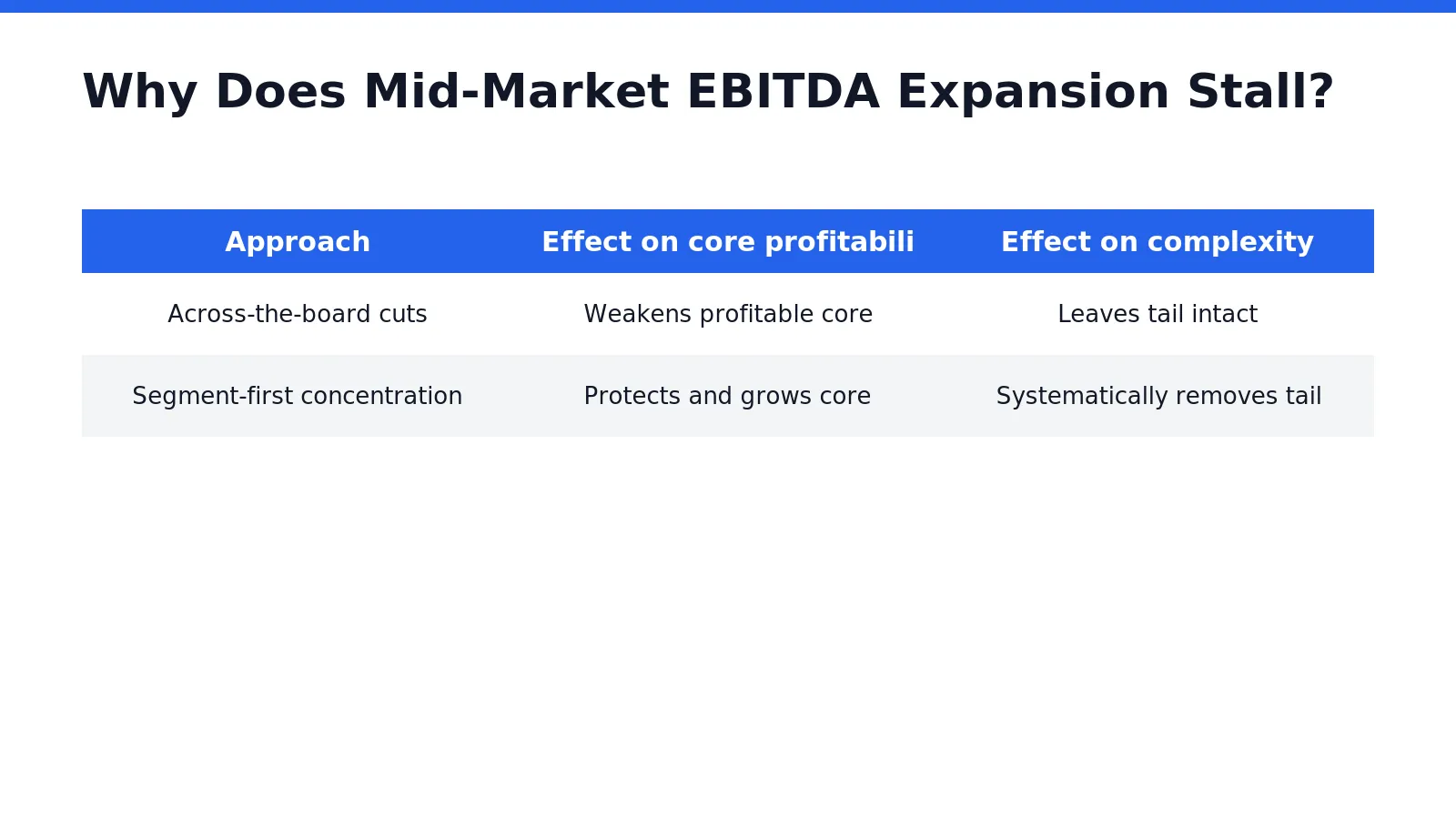
Mid-market EBITDA expansion stalls when leadership teams attack cost instead of concentration. The 80/20 Institute’s analysis found that across-the-board cost-cutting often weakens the profitable core along with the unprofitable tail it was meant to fix. Blunt reductions punish the customers and products generating real margin just as hard as the ones draining it. That’s the trap most sponsors and operating partners fall into during a squeeze on returns.
The pressure driving this mistake is structural, not accidental. A broad corporate push toward “doing more with less” pushes leaders toward blanket cuts across every function, every SKU, every account. That instinct feels disciplined. It isn’t — it’s a shortcut that avoids the harder work of segmentation.
What actually drains EBITDA in a mid-market portfolio?
In most businesses, roughly 20% of customers and products carry nearly all the earnings. The remaining a notable share forms a long tail of low-value activity that quietly consumes cost, attention, and capital without ever showing up as a line-item villain. This is the diagnostic gap a mid market ebitda expansion effort has to close before any cutting begins.
Embracing the profitable growth operating system leads to a more focused and efficient enterprise.
To maximize the impact of the profitable growth operating system, continuous learning is essential.
Why doesn’t cost-cutting fix the real problem?
Cost-cutting treats every dollar of spend as equally guilty. It ignores which 20% of the business actually funds growth. Sponsors who skip segmentation end up shrinking margin twice. Once from the cut, once from the lost focus on what was working.

Can You Expand Margin Without Cutting Costs?
Yes. Durable margin expansion comes from concentration, not from across-the-board reduction. Bill Canady challenges the cost-cutting reflex that dominates most turnaround playbooks, arguing that the vital few customers and products deserve the resources. While the complexity surrounding them quietly drains profit. For CEOs and operating partners weighing a mid market ebitda expansion strategy, that distinction changes where the work starts.
The principles of the profitable growth operating system promote efficiency across all departments.
Stakeholders should familiarize themselves with the profitable growth operating system to harness its full potential.
Cost-cutting spreads pain evenly across the business. Concentration does the opposite: it protects what already works. The 80/20 Institute makes this argument directly, positioning margin growth as a function of focus rather than austerity. A small share of customers and products already generates most of the profit. Management’s job is to feed that share deliberately.
What Does “Starving Complexity” Actually Mean?
The profitable growth operating system aligns well with modern business practices focused on value creation.
Starving complexity means withdrawing investment, SKUs, and management attention from low-value activity that erodes the profitable core. It does not mean layoffs across every department. Complexity accumulates quietly — extra product variants, marginal accounts, redundant processes — and each layer taxes margin without anyone noticing until EBITDA stalls.
Where Do Operating Partners Start This Work?
Operating partners start by mapping revenue and profit contribution across the customer. Product base, then acting on what the data shows.
- Identify the small segment generating disproportionate profit
- Redirect capital and talent toward that segment
- Retire or reprice the complexity draining margin elsewhere
Bill Canady’s approach teaches leaders to strip out complexity, reduce cost only where it serves focus, and unlock profit already trapped inside the business. That sequencing — concentrate first, cut second — separates a private equity value creation framework built for compounding EBITDA from a one-time cost exercise that erodes enterprise value over time.
What Does a Private Equity Value Creation Framework Require?
A private equity value creation framework requires leadership discipline, portfolio-wide standardization, and a repeatable path to margin expansion. Not isolated cost cuts. Operating partners overseeing mid market EBITDA expansion need a system that works across industrial platforms, distribution networks, and international operations alike. Sponsors rarely hold single-market, single-product companies.
Bill Canady built this discipline through decades spanning public, private, and private equity-backed companies across international markets. That range matters for sponsors: a framework tested only in one sector rarely survives contact with a diversified portfolio. Bill Canady serves as CEO of Arrowhead Engineered Products and has previously held leadership roles in other organizations. That combined experience spans organizations with substantial combined revenue and thousands of employees. Scale that mirrors the complexity most mid-market sponsors are trying to simplify.
The profitable growth operating system encourages a shift toward data-driven decision-making.
Ultimately, the profitable growth operating system leads to a more resilient and adaptable business model.
For best results, align all stakeholders with the goals outlined in the profitable growth operating system.
What should sponsors look for in an EBITDA-focused operating framework?
Sponsors should demand a framework built for scale, not slides. The right approach gives leadership teams tools to triple equity value within a three-year hold, translating strategy into measurable margin gains rather than aspirational targets.
A credible framework typically delivers:
- Standardized diagnostics that expose which customers, products, and plants actually drive profit
- A common operating language across multiple portfolio companies
- Leadership accountability tied directly to EBITDA milestones, not activity metrics
- Proven application across public, private, and sponsor-backed structures
The profitable growth operating system can help businesses navigate challenges and foster resilience.
The journey to mastering the profitable growth operating system begins with a comprehensive understanding of its tenets.
Sponsors evaluating any 80/20 business operating system should weigh whether the operator behind it has run organizations at comparable scale, not just consulted on them.
Organizations can achieve their goals more effectively with a committed approach to the profitable growth operating system.
How Should CEOs Choose an EBITDA Growth Framework?
Selection criteria matter more than framework popularity. A mid-market CEO evaluating options for mid market ebitda expansion should weigh three factors: proof of results, structured execution steps, and fit with the leadership team’s current bandwidth. Frameworks built on documented outcomes deserve more weight than trend-driven playbooks. Bill Canady’s track record includes $3 billion in shareholder value created across three decades of industrial leadership, a figure that reflects sustained application rather than a single deal.
Execution discipline separates frameworks that work from frameworks that stall. The Rule of Three addresses a common failure point in private equity-backed companies: the CEO who becomes the bottleneck. This framework shows leaders how to align their teams. Drive execution without personally running every function, a distinction that matters once a portfolio company scales past founder-led operations.
Incorporating the profitable growth operating system within your strategy can enhance operational clarity.
Peer accountability also shapes framework selection. The 80/20 Institute Community gives CEOs and operators access to tools built around the 80 20 business operating system, designed to help leadership simplify, focus, and grow without adding organizational chaos. Structured community input catches blind spots that internal teams miss.
What makes a framework suitable for private equity-backed companies?
A framework suited to a private equity value creation framework context needs measurable milestones tied to enterprise value, not just operational tidiness. “The 80/20 CEO” offers CEOs a structured method for applying the Pareto Principle across a 100-day window, giving sponsors a timeline to track.
Leaders comparing options against the profitable growth operating system. Its underlying pgos framework, should test each candidate against these same four criteria before committing resources.
What Results Have Mid-Market Companies Achieved?
Middle-market companies applying disciplined 80/20 business operating system principles have generated more than $3 billion in shareholder value. That figure spans three decades of P&L leadership across industrial and consumer sectors. For a Private Equity Sponsor evaluating mid-market EBITDA expansion, the track record matters more than the pitch.
More than 300 companies have been transformed through this system. That number represents a broad range of situations — turnarounds, carve-outs, add-on integrations, and organic growth pushes — not a single industry niche. Operating Partners often ask a version of the same question before committing to a framework.
How fast can EBITDA improve under this system?
Companies applying the profitable growth operating system have typically seen first-year EBITDA gains of 20% to 40%. That range holds across varied starting conditions, which matters for boards weighing hold-period risk. A first-year elevator in that band changes the math on a three-to-five-year exit plan.
What experience backs the framework?
The pgos framework rests on more than 30 years of direct P&L leadership, not theoretical modeling. Decision-makers evaluating a private equity value creation framework need proof it has run through real cycles. Expansions, downturns, and ownership changes alike.
For CEOs and C-Suite Leaders comparing options, these figures set a baseline. A framework that has moved hundreds of companies through the same phases offers a different risk profile than an untested internal initiative.
How Do You Start Implementing PGOS?
Implementation begins with a conversation, not a workbook. Middle-market leaders pursuing mid market EBITDA expansion gain the most traction when they treat the first step as diagnostic, not administrative. A structured call maps the gap between current performance and the enterprise value a private equity sponsor expects at exit. From there, the path into the profitable growth operating system takes shape around the specific complexity draining a given business.
What happens on that first call?
Leaders define exactly what the business needs before committing to any framework. The conversation identifies where margin leaks, which segments matter, and how fast the team can execute. That clarity replaces a generic playbook with a sequence built for the company’s actual constraints.
Bill Canady built this approach on more than three decades leading industrial and consumer products organizations. That track record shapes a no-nonsense, results-oriented method for business transformation, one built on clarity and candor rather than theory. Operating partners evaluating a private equity value creation framework should expect the same discipline applied to their own portfolio companies.
Committing to a profitable growth operating system can transform an organization’s trajectory.
The profitable growth operating system serves as a foundational element for strategic initiatives.
Why not start with a book or a course instead?
Books and courses explain principles; they rarely diagnose a specific business. Real implementation of the pgos framework requires a direct assessment of segments, cost structure, and execution capacity. Engagement starts where the conversation starts:
- Assess current profitability by segment and product line
- Identify complexity that quietly erodes margin
- Sequence execution before committing capital or headcount
That sequencing separates a working 80 20 business operating system from another shelved strategy document.
FAQ
What is the Profitable Growth Operating System?
The profitable growth operating system fosters a culture of accountability among teams.
By integrating the profitable growth operating system into daily operations, organizations can expect measurable results.
Ultimately, the profitable growth operating system is about strategic alignment and focused growth.
PGOS is Bill Canady’s four-discipline framework, built on the 80/20 principle, that helps mid-market CEOs and PE sponsors expand EBITDA, simplify operations, and build durable enterprise value through measurable margin gains.
What are the four phases of the PGOS framework?
The profitable growth operating system can be tailored to fit the unique needs of each organization.
The framework moves teams through Segment, Simplify, Zero-Up, and Grow—identifying high-value customers and products, removing complexity, rebuilding budgets from a clean baseline, and directing capital toward the vital few opportunities.
For impactful results, businesses must leverage the profitable growth operating system effectively.
How does PGOS differ from generic cost-reduction consulting?
PGOS concentrates resources on already-profitable segments rather than cutting broadly across the business, a distinction that matters directly for portfolio hold-period returns and durable margin expansion.
Conclusion
In closing, the Profitable Growth Operating System transforms how mid-market leaders allocate resources and drive EBITDA expansion. By applying 80/20 discipline across operations, you eliminate the noise obscuring your most valuable opportunities. This framework demands clarity, candor, and relentless focus on what actually moves the needle. The leaders who implement it don’t just grow—they simplify their path to sustainable, profitable scale. Your competitive advantage lies not in complexity, but in the disciplined execution of what matters most.